Danube River Dance Cruise Itinerary
Day 1-2 -Vienna
Vienna is a city that defies simple description. Over the centuries, it has been an imperial city, seat of the Holy Roman Empire, capital of the Austro-Hungarian Empire, and capital of sovereign Austria. Today, Vienna retains the grand Baroque architecture, historic style, and Lebenskunst (art of living) that attracted famous composers like Mozart and Strauss. It’s a wonderland of lavish palaces and cathedrals, world-class museums and music venues, atmospheric coffee houses, and romantic fiakers (horse-drawn carriages) clip-clopping past it all.
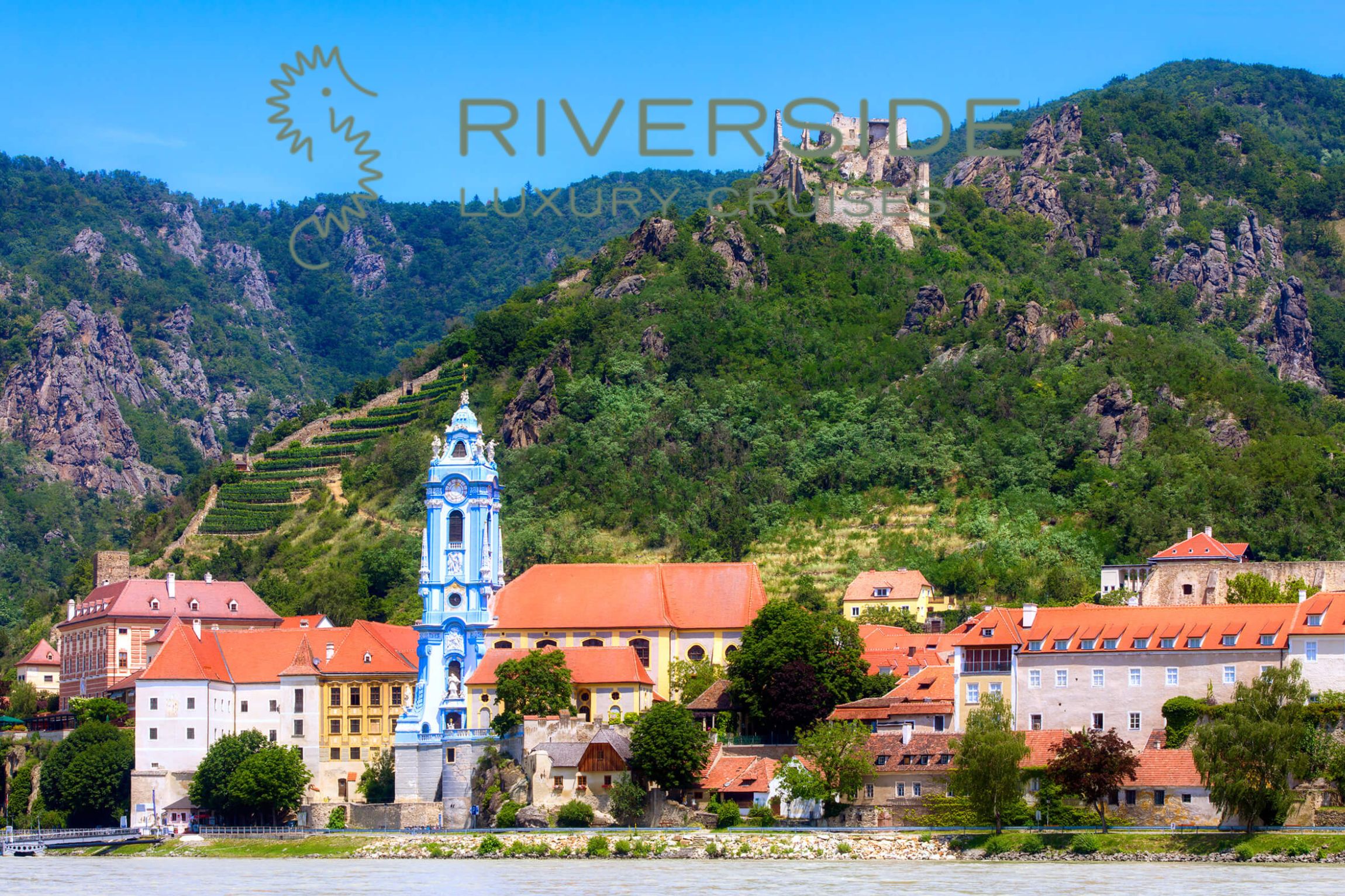
Day 3- Dürnstein
If ever a town was the embodiment of quaint, it’s Dürnstein. Sitting right at the entrance to the celebrated Wachau Valley, everything about this village is hospitable—even the vineyards extend right to the riverbanks to greet visitors. Highlights include the striking blue and white Stiftskirche, and the castle ruin looming over town that once imprisoned King Richard the Lionheart, according to legends. Welcoming shops and wine taverns serving up the Wachau’s delectable wines and sweet apricots make this a wonderful place to spend time.
Day 3 – Melk
Built on a rocky promontory overlooking the Danube, Melk Abbey’s origins date back to 1089. Today, it is one of Europe’s finest examples of Baroque architecture, where Benedictine monks still farm the land and operate what is now the oldest school in Austria. Highlights include the library of ancient manuscripts, frescoed ceiling, stunning spiral staircases, and the ornate abbey church.
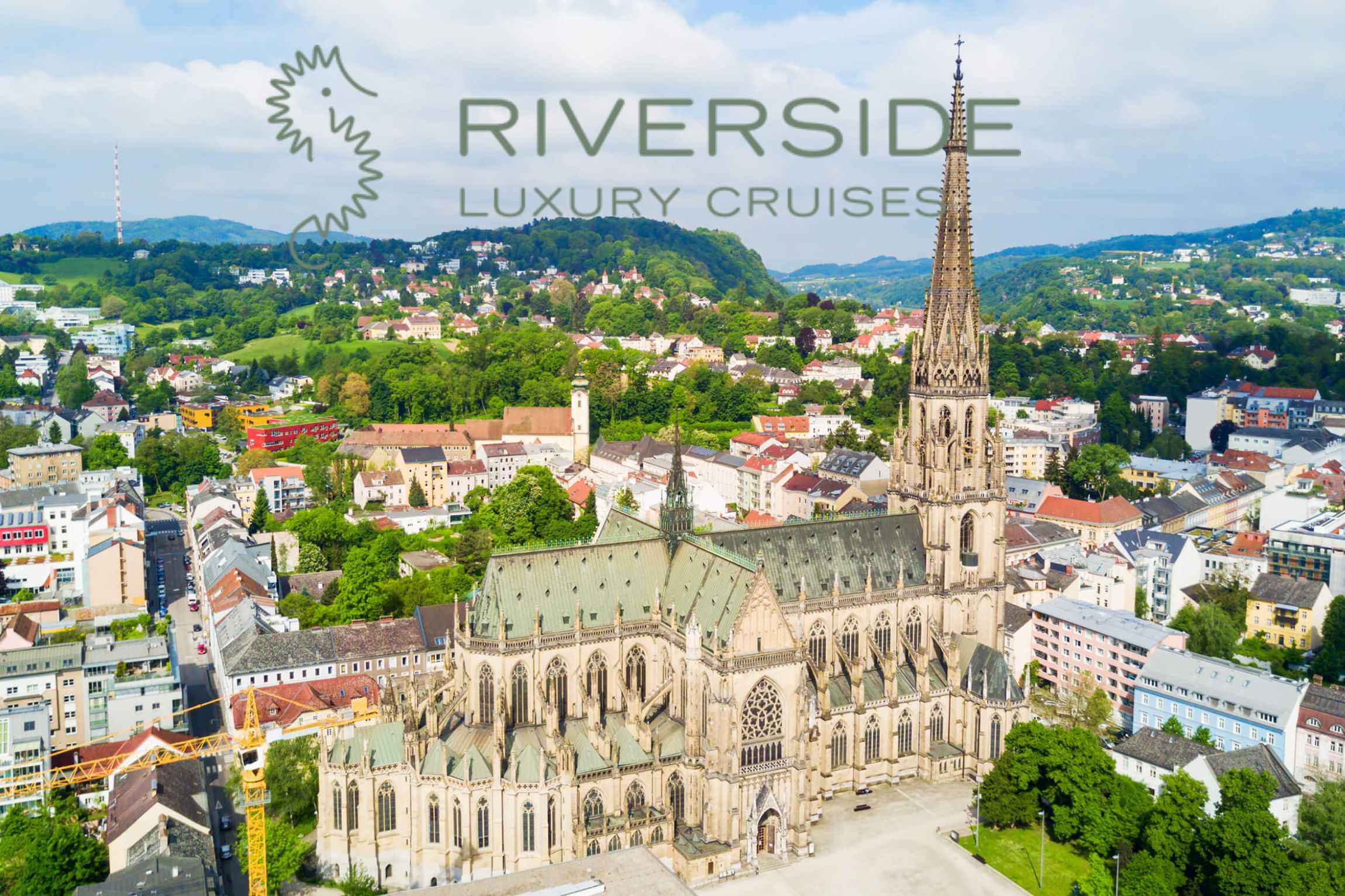
Day 4- Mauthausen, Linz
After the Third Reich’s annexation of Austria in 1938, the tiny market town of Mauthausen became home to a Nazi concentration camp. Today, the former camp serves as a memorial to the 200,000 men, women, and children who were imprisoned and perished there—and a site committed to political and historical education.
Day 5- Passau
Situated along the Route of Emperors and Kings where the Danube, Inn, and Ilz Rivers meet, Passau was settled as early as the Neolithic Age. During the Renaissance, this City of Three Rivers was a major manufacturing center of swords, crafting bladed weapons stamped with the Passau wolf, which legend claimed would grant invulnerability. Today, the most famous sights lining the narrow cobblestone streets of the Old Town are the artistic Town Hall and the Baroque St. Stephen’s Cathedral with its green-domed towers and one of the largest organs in the world.
Day 6-7- Grein
Grein is primarily known for its castle, which has been towering over the river for 500 years. The former hunting castle features a knights’ hall, stone theater lined with Renaissance-era pebbles from the river, and diamond vault. Grein is also home to Austria’s oldest still-active theater, which is filled with oddities, like locking front-row seats, a curtained-off toilet right in the theater so audience members wouldn’t miss the performance, and a “jail seat” where prisoners could watch the show through a window!
Day 7- Krems
First mentioned in 995 AD, Krems became prosperous as a trade center for salt and wine. Its cobblestoned Old Town is home to well preserved buildings, like the 15th-century Steiner Tor (city gate), symbol of the city. Also worth seeing: the Krems Art Mile with Austria’s only caricature museum and the State Gallery of Lower Austria; 11th-century Göttweig Abbey; and wine! Surrounded by vineyards, Krems produces some of the country’s best wines!
Day 8- Vienna